Real Turf or Artificial Grass: Which Is Best for Clay?
If your garden turns into a boggy mud bath every October and bakes like concrete in July, you are dealing with heavy clay. Both natural turf and artificial grass can work brilliantly on clay soil—provided you dig out the right depth and put a proper drainage base underneath. Here is the honest trade breakdown of what each option actually involves on site.
The Short Answer: What You Need to Know First
Upfront Cost & Dig-Out
Real turf costs significantly less upfront because it needs a shallower dig-out (usually 100mm–150mm) and sandy topsoil. Artificial grass costs more initially because we have to excavate 100mm–150mm of heavy clay, haul it away in skips, and build a full stone sub-base just like a patio.
Winter Drainage & Mud
If your garden is shaded by fences or trees and used daily by children or dogs in winter, artificial grass stops mud coming into the house altogether. Real turf on clay will stay damp in winter and needs you to stay off it during heavy frosts or downpours to avoid churning the surface.
Time on Site
A typical family lawn takes 2 to 3 days for real turf (including rotavating, land drains if needed, and screened topsoil) or 3 to 5 days for artificial grass (due to mechanical excavation, MOT Type 1 compaction, timber or concrete edging, and joining the rolls).
Why Heavy Clay Soil Ruins Unprepared Gardens
Across much of Greater Manchester and the wider North West, dig down past the top couple of inches of grass and you hit dense, sticky clay subsoil. Clay particles pack tightly together with almost no air pockets between them. When autumn and winter rain arrives, surface water cannot soak down through that clay shelf quickly enough.
Instead, water sits trapped in the top 50mm of your lawn. If someone rolls fresh turf straight over unworked clay—or worse, lays artificial grass over a thin dusting of sand without digging out the clay first—the garden fails within a single winter.
- ✓ On poorly laid real turf: The grass roots drown from lack of oxygen, moss and leatherjackets take over, and walking to the shed leaves soggy footprints that freeze solid.
- ✓ On poorly laid artificial grass: The wet clay underneath goes soft like putty. Foot traffic causes depressions and footprints under the carpet, weeds push through the backing, and stagnant water smells foul in spring.
Whether you prefer living grass or a synthetic lawn, the secret on clay is never the grass itself—it is what happens with the mini-digger and the sub-base before a single roll goes down.
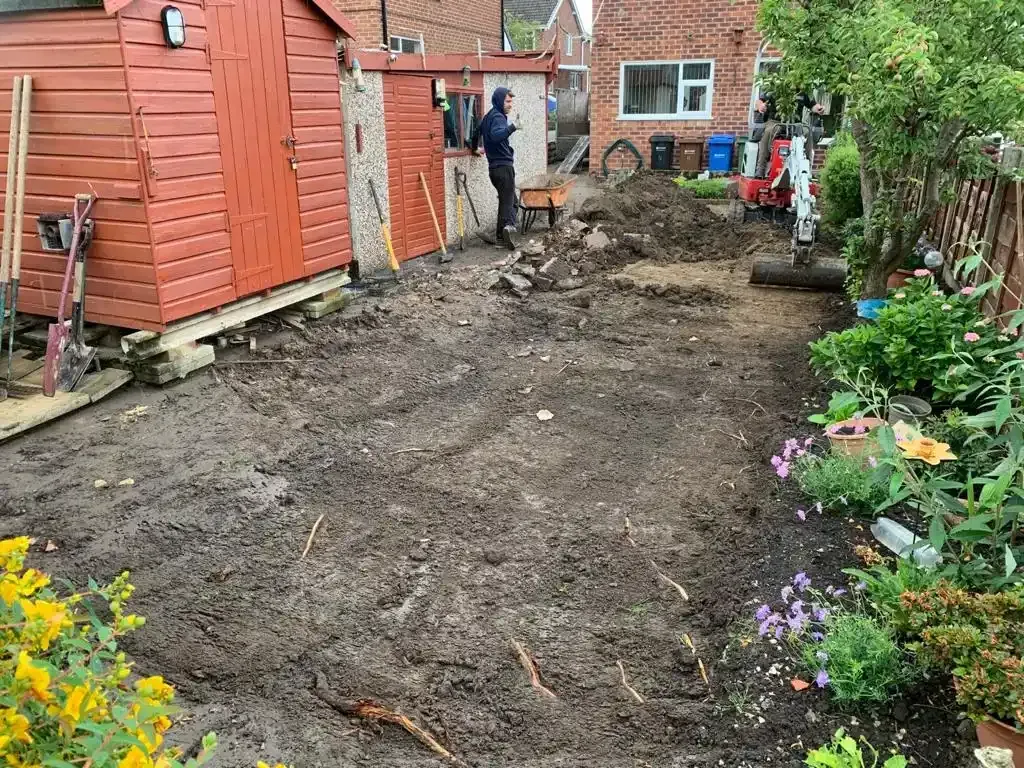
How We Prepare Clay Ground for Each Option
Customers often ask why quotes vary so much between contractors. Usually, a cheap price means skipping the excavation and waste removal. Here is how a proper groundworks team builds each lawn on clay so it drains properly.
Option 1: Natural Turf on Clay
Best for gardeners, hot summer cooling, and lower upfront excavation costs
To make real grass thrive over clay, we have to create a free-draining root zone so water doesn't sit around the grass crowns in January.
1. Strip & Break the Clay Pan (100mm–150mm)
We strip off the old mossy lawn and dig out the worst of the sour top clay. We then break up and de-compact the underlying clay layer rather than smearing it flat.
2. Perforated Land Drains or Soakaway (If Waterlogged)
If your garden sits at the bottom of a slope or holds standing puddles for days, we trench in perforated land drainage pipes wrapped in geotextile membrane and backfilled with clean 20mm pea shingle, leading to a gravel soakaway crate well clear of house foundations.
3. Grit Sand & Screened Sandy Loam Topsoil
We bring in 75mm to 100mm of high-grade, sandy root-zone topsoil blended with sharp grit sand. This gives the new turf roots breathing room and stops the surface sealing up when wet.
4. Laying & Boarding
We lay cultivated seeded rolls in a staggered stretcher-bond pattern, working off timber crawl boards so we never leave heel divots in the fresh soil.
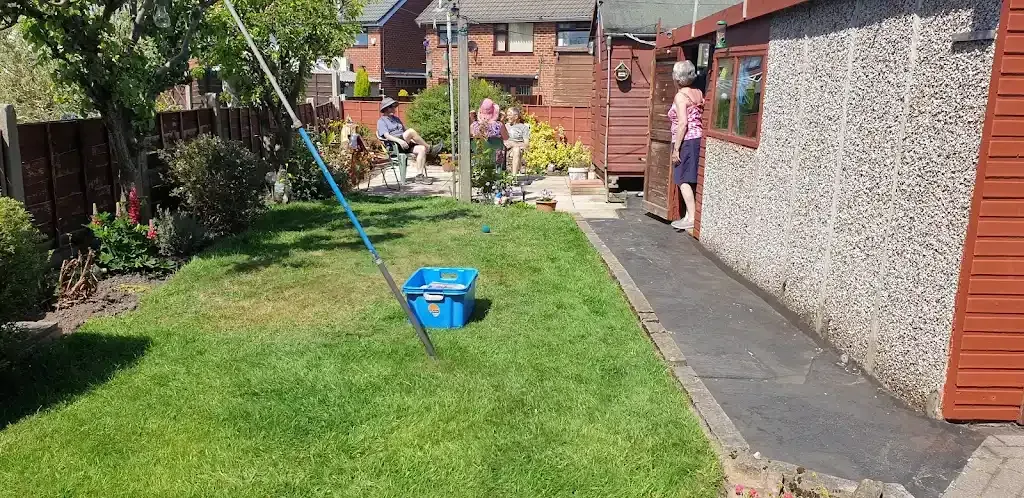
Option 2: Artificial Grass on Clay
Best for shaded plots, heavy winter foot traffic, children's play areas, and zero mud
Installing artificial grass on clay is 90% groundworks and 10% carpet fitting. We treat the base like a porous driveway so it never sinks or holds water.
1. Full Mechanical Dig-Out (100mm–150mm Depth)
We excavate the turf and wet clay down to a firm level. All spoil is loaded into skips and removed under registered waste carrier notes.
2. Geotextile Separation Membrane & Perimeter Edging
We line the clay trench with heavy-duty woven geotextile membrane. This stops the stone sub-base sinking into the wet clay. Around the perimeter, we fix solid edging—either tanalised timber battens, composite fixing strips, or block paving borders set in concrete haunching.
3. Compacted MOT Type 1 & Granite Dust Screed
We compact 75mm–100mm of MOT Type 1 crushed limestone (or clean permeable limestone where rapid drainage is critical) with a heavy vibrating plate compactor, topped with a 20mm–25mm screed of 6mm-to-dust granite grits—never soft builder's sand, which washes away.
4. Securing & Kiln-Dried Silica Sand Infill
We lay a secondary weed membrane, stretch and fix the grass rolls with two-part adhesive tape and perimeter fixings, then power-brush kiln-dried silica sand into the pile to hold it down and keep the blades upright.
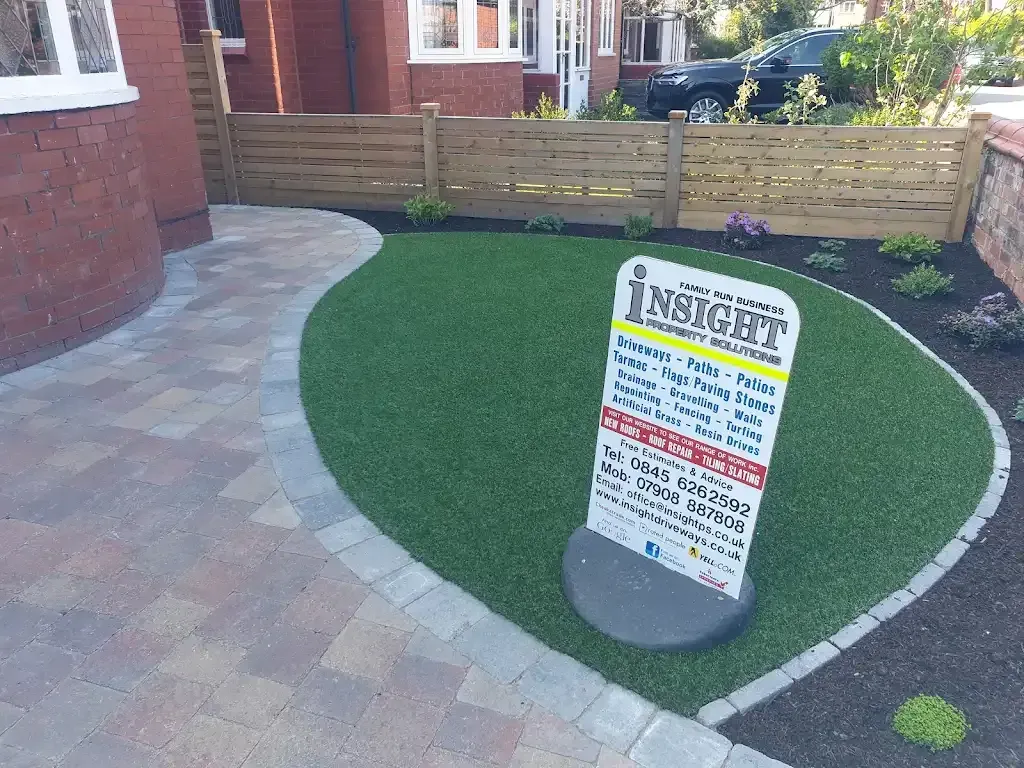
Practical Things to Consider Before You Decide
1. Dogs and Pets on Clay Gardens
The reality with real turf: If you have one or two lively dogs running out in January, they will tear up a real lawn on clay soil within weeks, leaving you wiping muddy paws five times a day. Urine also scorches yellow patches in summer.
The reality with artificial grass: No muddy paws ever. However, if you have dogs, we must build the sub-base using clean, non-limestone permeable aggregate and skip the standard silica sand infill (or use specialist pet infill) so urine washes straight through. In dry summer spells, you will still need to hose it down occasionally with an enzymatic cleaner to stop smells lingering.
2. North-Facing & Shaded Gardens
The reality with real turf: High boundary walls, mature trees, and north-facing aspects mean the sun never dries out the winter clay. Even shade-tolerant turf mixes struggle when the soil stays cold and sodden from November to April.
The reality with artificial grass: Artificial grass doesn't need sunlight to stay green, making it ideal for enclosed gardens or side returns. You will simply need to brush off fallen autumn leaves so they don't rot down into the pile and encourage moss growth.
3. Ongoing Maintenance (Low vs No Maintenance)
The reality with real turf: Needs mowing weekly through spring and summer, edging, seasonal feeding, and autumn aeration (hollow-tining) to keep clay soil from compacting back down over the years.
The reality with artificial grass: No mowing, no strimming, and no watering. However, no outdoor surface is zero maintenance—airborne seeds will blow in from neighbouring gardens and try to root in the top pile if you don't brush it with a stiff broom every month or two.
4. Surface Water Runoff & House Foundations
Whether we lay real turf or artificial grass, we always check the levels against your house damp-proof course (DPC). Ground levels must sit at least 150mm (two brick courses) below the DPC.
Where a lawn meets an Indian sandstone or block paved patio on clay ground, we set a slight fall away from the house and install linear ACO channel drains or recessed gravel traps so heavy downpours never pool against your brickwork.
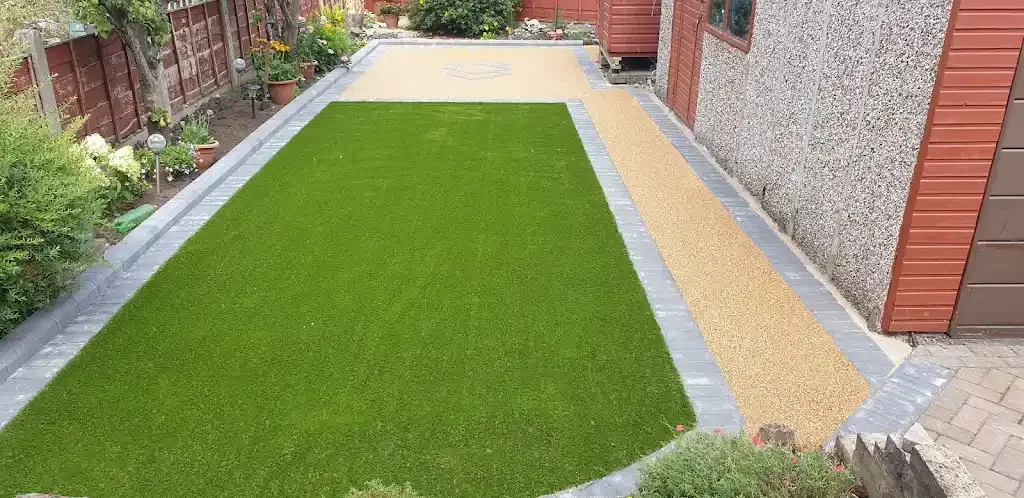
How to Keep Biodiversity with Artificial Grass (Or Save a Real Lawn)
Many homeowners don't want an all-plastic garden, or they want real grass without traipsing mud to the back gate. On full garden makeovers, we frequently build a practical middle ground:
- ■ Deep planted borders & sleepers: If you choose artificial grass for the central play area, leaving generous raised beds or perimeter soil borders gives worms, birds, and pollinators thriving space—while also giving heavy rainfall an extra natural soakaway trench around the edges.
- ■ Hardwearing paths over real turf: If you love real turf, laying a proper block paved or sandstone path from the patio to the shed or bin store stops you walking across soggy grass in winter, preserving the lawn for summer.
Related Services & Guides
Explore our landscaping services and practical groundwork guides for homeowners across Greater Manchester and North Cheshire.
Landscaping & Garden Makeovers in Stretford
Professional garden transformations in Stretford. From turfing and artificial grass to site clearance and drainage. Expert family-run landscaping team.
Do I Need Planning Permission to Pave My Front Garden?
Learn the UK planning rules for paving a front garden. We explain the 5m² SuDS rule, permeable surfaces, soakaways, and council dropped kerb permits.
How Long Does It Take to Lay a New Patio?
Most garden patios take 3 to 7 working days to lay. See our day-by-day schedule covering excavation, Type 1 sub-bases, mortar bedding, and curing times.
Are Concrete Fence Posts Better Than Wooden Ones?
Compare concrete fence posts with gravel boards against treated timber posts. Learn about lifespan, wind resistance, costs, and stopping ground-level rot.
How Do You Stop Garden Water Running Towards the House?
Learn how to stop patio and driveway water pooling against your walls using ACO channel drains, correct surface falls, and properly sited soakaways.
Why Are My Patio Slabs Loose and Rocking?
Find out why natural stone patio slabs work loose over time and how lifting, cleaning, and re-bedding them on a full wet mortar bed with SBR fixes the issue.
Want an Honest Assessment of Your Garden's Clay Soil?
With over 25 years of hands-on groundwork and landscaping experience from our base in Chorlton-cum-Hardy, we can inspect your garden levels, check access for excavation, and give you a clear, written, no-obligation quote for either natural turf, artificial grass, or drainage improvements.