Are Concrete Fence Posts Better Than Wooden Ones?
The short answer from 25 years on the tools: if you want a fence that will not rot at ground level and lets you slide in new panels after a winter gale without digging up the garden, concrete posts with concrete gravel boards win hands down. Wooden posts look softer and cost roughly 15% to 25% less upfront, but even good pressure-treated timber eventually gives in to damp soil.
Quick Summary: What You Need to Know Before Buying
- ■ Lifespan: Concrete posts easily last 25 to 30+ years. Pressure-treated wooden posts typically last 7 to 12 years before rotting at the soil line.
- ■ Upfront Cost: Choosing concrete posts with recessed concrete gravel boards adds roughly 15% to 25% to the material bill compared to an all-timber setup, though the labour to dig the holes is almost identical.
- ■ Storm Repairs: With slotted concrete posts, a wind-damaged panel simply lifts out the top. With wooden posts, replacing a snapped post means breaking out the old concrete footing.
- ■ Installation Time: A standard domestic garden run of 8 to 12 bays takes our two-man team 2 to 3 working days, including breaking out old footings and clearing the waste.
Why Fence Posts Snap: The Reality of Ground-Level Rot
When we get called out after a winter storm to inspect a leaning or collapsed fence, the customer usually assumes the wind was simply too strong for the panels. Nine times out of ten, the panels are intact—it is the wooden posts that have sheared clean off right where they meet the soil.
People often assume a post rots at the very bottom of the hole. In reality, rot happens in the top 150mm of soil. Deep underground, there is not enough oxygen for wood-rotting fungi to thrive. Up in the open air, the wind dries the timber out after rain. Right at the turf line, however, the wood stays permanently damp, sits against wet soil, and gets plenty of oxygen.
Across South Manchester and Trafford, gardens sit on heavy, moisture-retentive clay subsoil. During autumn and winter, water sits around the collar of the concrete footing like a bowl. Even if a timber post is pressure-treated (tanurned), water eventually creeps into the end-grain or through tiny splits as the wood seasons. Once fungal decay eats halfway through a 100mm x 100mm (4x4 inch) timber post, the first 50mph gust uses the fence panel like a sail and snaps the post at the neck.
Side-by-Side Comparison: Concrete vs Pressure-Treated Timber
Both materials have their place depending on the style of fencing you want and how long you plan on staying in the property. Here is how they stack up on site.
| Feature | Slotted Concrete Posts | Pressure-Treated Timber Posts |
|---|---|---|
| Expected Lifespan | 25 to 30+ years (impervious to rot and damp clay) | 7 to 12 years (up to 15 years if UC4 kiln-dried and well-drained) |
| Resistance to Wet Soil | Total. Steel-reinforced wet-cast concrete does not decay underground. | Vulnerable at the soil collar where moisture and air meet. |
| Wind & Storm Behaviour | Very rigid. Panels may rattle slightly in slots unless wedged with clips. | Slight natural flex, and panels are screwed solid so they never rattle. |
| Future Panel Swaps | Easy. Slide old panel up and out; drop new panel straight in. | Harder. Rusted screws or nails must be prised out or cut with a reciprocating saw. |
| Visual Appearance | Utilitarian grey pillars between bays (though they can be painted with masonry paint). | Warm, natural timber look; ideal for continuous closeboard (feather edge) runs. |
Why the Gravel Board Matters Just as Much
Putting a good timber panel directly onto wet soil or grass is asking for trouble. Within two winters, the bottom arris rail and feather edge slats soak up ground moisture, turn green, and rot away.
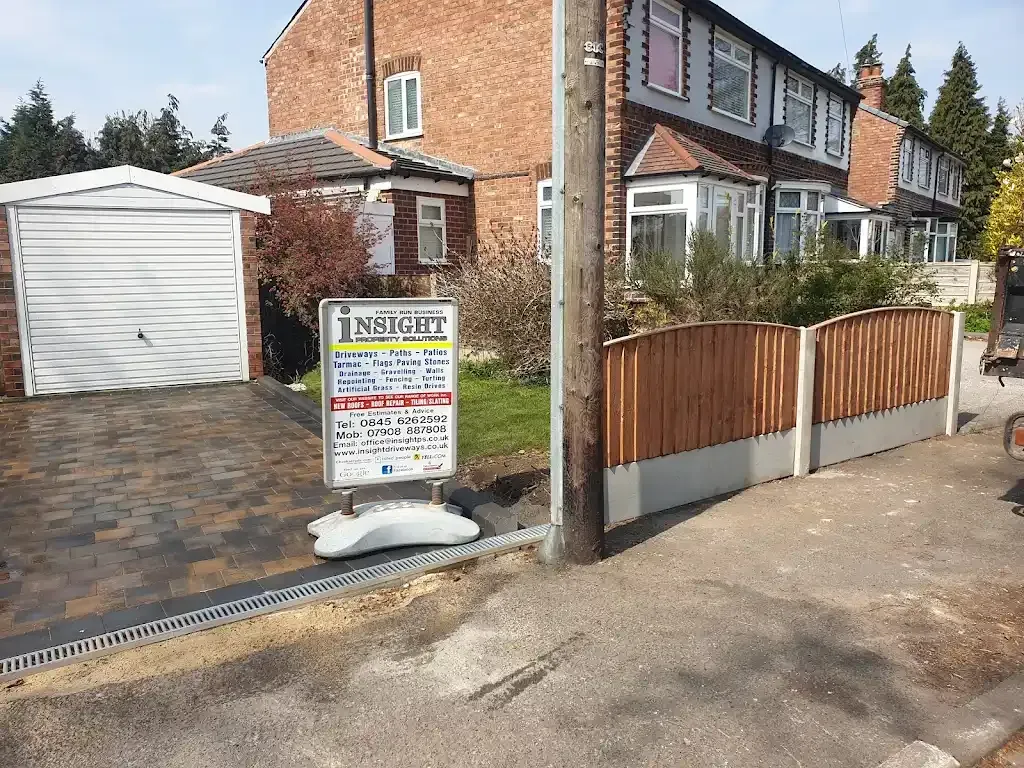
When we install slotted concrete posts, we drop a 150mm or 300mm concrete gravel board into the bottom of the slot first. That keeps the timber fence panel completely clear of wet soil, lawn edges, and strimmer damage. Even if you choose wooden posts, we always fit a heavy-duty treated timber gravel board at the base to act as a sacrificial barrier.
When Should You Still Choose Wooden Fence Posts?
Even though concrete lasts longer in wet ground, we still install plenty of timber posts where the design calls for them. Wooden posts are the right choice when:
- 1. You want continuous feather edge (closeboard) fencing: If you attach horizontal timber cant rails or arris rails across the face of wooden posts and nail vertical feather edge boards straight across the front, you get a completely seamless wall of timber from one end of the garden to the other with no visible posts on the good side.
- 2. You are hanging heavy garden gates: Drilling into steel-reinforced concrete posts to hang heavy ironmongery can crack the post or hit the internal rebar. Bolting a timber wall-plate to a concrete post works, but a thick 100mm x 100mm or 125mm x 125mm timber gate post takes heavy tee-hinges and latches cleanly.
- 3. You hate the panel rattle in windy corridors: Because standard panels sit loosely inside the H-section slots of concrete posts, gusts of wind can make them clatter. While plastic anti-rattle wedges solve most of this, panels screwed tightly into timber posts are dead silent.
Trade tip if you choose wood: Make sure your contractor uses UC4 (Use Class 4) pressure-treated posts, not cheaper UC3 timber meant for above-ground rails. We also haunch the top of the concrete footing around the base of the post with a slight slope away from the wood so rainwater runs off into the border instead of pooling against the timber collar.
How We Set Posts So They Stay Upright in High Winds
A concrete post is only as strong as the hole it sits in. If a post is only dug 300mm or 400mm into soft topsoil, a winter gale will simply rock the entire concrete ball back and forth until the fence leans over.
For a standard 1.8m (6ft) high garden fence, we use 2.4m (8ft) posts and excavate post holes to a minimum depth of 600mm (2ft) below ground level—deeper if the garden is on an exposed corner plot or built-up made ground.
During a typical boundary replacement, the hardest part of the day is breaking out the old concrete footings left behind from previous fences. We use heavy-duty mechanical breakers and narrow post-hole spades to clear the old lumps completely so the new posts follow a dead-straight string line. Once each post is plumbed vertically on two adjacent faces with a spirit level, it is bedded tightly in high-strength post-mix or wet-batched ballast concrete. All rotten panels, snapped posts, and broken concrete rubble are loaded straight onto our truck and disposed of legally under our Environment Agency waste carrier licence.
Height Rules and Boundary Etiquette
In the UK, you generally do not need planning permission to replace or put up a back garden fence as long as the total height—including the gravel board at the bottom and any trellis on top—does not exceed 2 metres (around 6ft 6in) from ground level. If the fence fronts onto a public road, pavement, or highway footpath, the maximum permitted height without planning approval drops to 1 metre. Before we dig, we always walk the line with you to check shared boundary alignments and keep any excavation well clear of shallow utility pipes or tree roots.
Related Services & Guides
Timber Fencing Installation & Repairs in Stretford
Expert timber fencing installation and storm damage repairs in Stretford. We install feather edge, lap panels, and concrete posts for secure boundaries.
Do I Need Planning Permission to Pave My Front Garden?
Learn the UK planning rules for paving a front garden. We explain the 5m² SuDS rule, permeable surfaces, soakaways, and council dropped kerb permits.
How Long Does It Take to Lay a New Patio?
Most garden patios take 3 to 7 working days to lay. See our day-by-day schedule covering excavation, Type 1 sub-bases, mortar bedding, and curing times.
Real Turf or Artificial Grass: Which Is Best for Clay?
Compare real turf and artificial grass on heavy clay soil. Learn about sub-base depths, drainage, pet suitability, and stopping winter waterlogging.
How Do You Stop Garden Water Running Towards the House?
Learn how to stop patio and driveway water pooling against your walls using ACO channel drains, correct surface falls, and properly sited soakaways.
Why Are My Patio Slabs Loose and Rocking?
Find out why natural stone patio slabs work loose over time and how lifting, cleaning, and re-bedding them on a full wet mortar bed with SBR fixes the issue.
Ready to Sort Out Your Garden Boundary?
Speak directly with our family-run team in Chorlton-cum-Hardy. We will visit your property, check your boundary levels, and give you a straightforward written estimate for concrete or timber fence posts with zero hidden extras.